Entomology and
Applied Science Letters
Applied Science Letters
 2026
Volume 13
Issue 2
2026
Volume 13
Issue 2

Microbiome-based transmission blocking offers a route to reduce mosquito-borne pathogen transmission by modifying microbial functions within vector hosts rather than relying exclusively on conventional insecticidal or genetic interventions. However, pathogen inhibition by an introduced microorganism does not establish that the intervention will remain functional across mosquito genotypes, developmental stages, microbial communities, environmental conditions, or pathogen evolutionary trajectories. This article develops an evidence-grounded conceptual structure for designing stable transmission-blocking synthetic mosquito microbiomes. The approach integrates community assembly, host compatibility, mechanistic functional redundancy, pathogen inhibition, evolutionary control, environmental persistence, transmission routes, ecological safeguards, and longitudinal monitoring as distinct but interdependent validation domains. The strongest synthesis is that durable transmission blocking cannot be inferred from the performance of a single microbial isolate or from short-term laboratory colonization. Stability instead requires compatible microbial coexistence, retention of blocking function after loss or alteration of individual members, resistance to ecological and evolutionary disruption, and sufficient persistence in target mosquitoes without uncontrolled spread through non-target hosts or environments. Current evidence supports individual elements of this structure, including host-dependent colonization, environmentally contingent microbial effects, mechanistically distinct pathogen-blocking functions, long-term persistence of selected inherited symbionts, and horizontal or environmental transmission by some candidate microorganisms. Nevertheless, complete synthetic communities have not been prospectively validated across these domains, and evidence remains highly dependent on mosquito species, microbial strain, pathogen lineage, life stage, rearing conditions, and spatial and temporal scale. Stable transmission-blocking microbiomes should therefore be developed through stage-gated validation in which assembly, function, evolution, persistence, spread, safety, and monitoring are evaluated separately before being integrated into a bounded ecological design.
INTRODUCTION
Mosquito vector competence is an emergent property of interactions among the insect host, its microbial partners, pathogens, and environmental context rather than a fixed attribute of the mosquito alone [1, 2]. This ecological perspective has expanded opportunities to interfere with malaria parasites and arboviruses through naturally occurring or engineered symbionts. Microbial interventions may act through secreted antipathogen molecules, nutrient competition, alteration of gut physicochemistry, immune modulation, or interference with pathogen development. Their potential value therefore extends beyond the presence of a particular taxon to the functions produced by the combined mosquito–microbe–pathogen system.
Axenic and gnotobiotic mosquito systems now permit causal separation of microbial presence, composition, and timing from host and rearing effects [3]. These experimental systems have strengthened mechanistic investigation by allowing microorganisms to be removed, introduced individually, or combined into defined communities. They also expose a central limitation: a community that can be assembled under controlled laboratory conditions has not necessarily demonstrated persistence through metamorphosis, repeated blood feeding, environmental exposure, competition with resident microorganisms, or transmission among mosquitoes. Laboratory controllability is methodologically valuable, but it is not evidence of ecological durability.
The available evidence nevertheless shows that mosquito gut communities are dynamic across development and functionally heterogeneous, which limits any assumption that a detected taxon is a stable intervention component [4]. Community composition may change with larval habitat, diet, mosquito genotype, temperature, microbial source pool, and pathogen exposure. The functional significance of an organism may also depend on its abundance, metabolic state, interacting partners, anatomical location, and timing relative to pathogen infection. Consequently, neither taxonomic occurrence nor short-term colonization is sufficient to define a reliable transmission-blocking member.
The unresolved problem is therefore not simply how to identify microorganisms that inhibit pathogens, but how to construct a microbial system that preserves the relevant function under ecological and evolutionary change. This article proposes that stable transmission-blocking synthetic mosquito microbiomes require four jointly considered properties: ecologically compatible assembly, mechanistically meaningful functional redundancy, explicit control of evolutionary instability and pathogen escape, and reliable but bounded persistence within mosquitoes and their environments. These properties are treated as non-equivalent validation domains. Community assembly in the laboratory is not equivalent to environmental persistence; functional redundancy is not equivalent to evolutionary stability; pathogen inhibition is not equivalent to durable transmission blocking; and horizontal transmission is not equivalent to controlled ecological spread. The proposed structure organizes available evidence into a falsifiable design logic rather than presenting a validated intervention framework.
Why single-microbe strategies may be ecologically fragile
Single-microbe strategies are attractive because they simplify cultivation, engineering, delivery, attribution of function, and quality control. Their apparent simplicity, however, can conceal dependence on environmental conditions that are absent from conventional laboratory assays. A nominally stable symbiont phenotype can be lost under ecologically realistic stress, as cyclical heat exposure differentially reduced Wolbachia density and maternal transmission among infections [5]. This finding does not show that every microbial intervention will fail under heat stress, but it demonstrates that stability is a strain-specific phenotype that must be challenged under relevant environmental regimes. A candidate that maintains density under constant laboratory temperature may therefore remain vulnerable to fluctuating thermal conditions, developmental bottlenecks, or seasonal extremes.
Microbial establishment also depends on interactions with resident communities and the host background. Serratia colonization is contingent on interactions with resident community members and mosquito background, showing that candidate performance cannot be inferred from monoculture competence alone [6]. A microorganism that grows efficiently in isolation may be excluded by an established community, facilitated by particular co-residents, or maintained only in certain mosquito genotypes. Colonization failure may consequently reflect competition, priority effects, host filtering, or the absence of a necessary microbial partner rather than an intrinsic inability to associate with mosquitoes. Conversely, apparent colonization success after high-dose inoculation may represent transient exposure rather than integration into a stable community.
The functional direction of a microbial association can also change with context. Glucose-mediated proliferation of Asaia bogorensis increased mosquito midgut pH and promoted Plasmodium infection under the tested conditions, illustrating that a commensal cannot be assigned a universal protective role independently of diet and microbial abundance [7]. Field-derived microbiome transplants have also elicited broader host transcriptional responses than laboratory-derived communities, indicating that laboratory simplification can remove microbial interactions relevant to compatibility and host physiology [8]. A single isolate may therefore fail through density loss, competitive exclusion, altered metabolism, host incompatibility, or reversal of its pathogen-related effect. The proposed components, evidence bases, boundary conditions, failure modes, and validation requirements are organized in Table 1.
Table 1. Why Single-Microbe Strategies May Be Ecologically Fragile: Components, Evidence Basis, Relations, Boundary Conditions, Failure Modes, and Validation Requirements
|
Proposed component |
Purpose |
Evidence basis |
Relation or mechanism |
Input or precondition |
Expected output |
Boundary condition or failure mode |
Validation requirement |
|
Environmentally robust candidate strain |
Determine whether microbial density and inheritance withstand realistic stress |
Symbiont density and maternal transmission can differ under cyclical heat exposure |
Temperature and other stressors alter microbial replication, tissue density, or inheritance |
Strain-resolved candidate maintained in the intended mosquito background |
Retention of viable colonization and relevant function during environmental variation |
Stability under constant laboratory conditions may conceal loss under fluctuating stress |
Repeated thermal, nutritional, developmental, and physiological challenge with post-stress functional testing |
|
Resident-community compatibility |
Determine whether the candidate can invade, coexist with, or recover within the mosquito microbiome |
Serratia establishment depended on resident bacteria and mosquito background |
Competition, facilitation, priority effects, resource use, and host filtering |
Characterized recipient microbiome and defined inoculation sequence |
Reproducible membership and abundance within a bounded community state |
Monoculture growth or high-dose exposure may not predict coexistence |
Invasion-from-rare, co-colonization, member-removal, and reciprocal host-background experiments |
|
Nutritional and metabolic stability |
Prevent environmental conditions from reversing microbial function |
Nutrient-driven bacterial proliferation altered gut physicochemistry and increased parasite infection |
Diet modifies bacterial abundance, metabolite production, and the host compartment experienced by the pathogen |
Relevant sugar, blood-meal, and larval nutritional conditions |
Blocking function maintained without pathogen-enhancing metabolic shifts |
A candidate may become neutral or pathogen-promoting under another diet |
Factorial diet–microbe–pathogen experiments with microbial abundance and compartment-level physiology |
|
Field-relevant community context |
Retain interactions present in environmentally acquired microbiomes |
Field-derived and laboratory-derived microbiome transplants induced different host transcriptional responses |
Community source changes microbial interactions and host immune or metabolic responses |
Representative field-derived communities, strains, or ecological source pools |
Host responses and microbial interactions that remain relevant outside standardized colonies |
Laboratory communities may omit taxa or functions that determine compatibility |
Reciprocal transplantation, field-derived isolate reconstruction, and phenotype validation beyond transcriptional responses |
|
Defined synthetic community |
Replace dependence on one organism with a traceable multi-member system |
Gnotobiotic methods permit controlled assembly, while ecological evidence shows that membership is context dependent |
Selected members occupy complementary ecological or functional positions |
Cultured, identified, archived, and individually characterized strains |
Reproducible consortium with measurable composition and function |
A mixture of strains is not necessarily a stable community |
Serial reconstitution, absolute-abundance measurement, perturbation testing, and cross-laboratory replication |
|
Mechanistically independent blocking functions |
Reduce the probability that loss of one microbial function eliminates the intervention effect |
Distinct microbial systems can inhibit pathogens through different mechanisms |
Independent antipathogen mechanisms provide potential functional buffering |
At least two causally characterized functions that can coexist in the same host context |
Blocking retained after experimental loss of one member or function |
Multiple members may depend on the same vulnerable host pathway |
Member-dropout, mechanism-specific inhibition, rescue, and combined pathogen-challenge experiments |
|
Bounded persistence and transmission |
Maintain exposure in target mosquitoes without uncontrolled ecological spread |
Mosquito-associated microbes may use inherited, contact-mediated, or environmental acquisition routes |
Persistence depends on survival, reacquisition, transmission route, and recipient range |
Known viable reservoir, route, dose, host range, and environmental decay profile |
Sufficient target-host maintenance with detectable spatial and biological limits |
Horizontal transmission is not equivalent to controlled ecological spread |
Route-specific donor–recipient studies, non-target testing, environmental viability assays, and spatial monitoring |
|
Longitudinal monitoring |
Detect ecological or functional failure after initial colonization |
Microbial effects can change with host, community, diet, stress, and source environment |
Repeated measurement distinguishes stable function from temporary success |
Archived baseline strains, validated assays, and predefined sampling points |
Early identification of density loss, community turnover, effect reversal, or spread |
Surveillance without decision rules does not control failure |
Prospective thresholds for re-testing, redesign, containment, pause, or termination |
Community assembly and host compatibility
Community assembly describes the processes by which microorganisms enter, establish, coexist, disappear, or change in abundance within mosquito hosts and associated habitats. Host compatibility concerns whether the resulting association remains physiologically tolerable and functionally appropriate across relevant life stages and mosquito backgrounds. Germ-free and transient-colonization experiments show that microbial requirements and host responses vary with developmental stage and husbandry context [9, 10]. These studies demonstrate the value of controlled reconstitution, but they also show why a community assembled during larval development cannot automatically be assumed to persist in the adult gut or to retain the same function after metamorphosis. The relevant unit of validation is therefore not initial inoculation, but the temporal relationship among microbial membership, absolute abundance, host development, and function.
Host filtering and environmental recruitment may generate recurrent community patterns without producing a fixed community composition. Three axenic mosquito species exposed to a common environmental source recruited a shared core of bacteria, supporting the existence of broadly compatible taxa under a common-garden condition [11]. However, convergence on a shared larval core does not establish that those bacteria remain viable in adults, resist later invasion, or retain pathogen-blocking activity. Similar community profiles may also conceal strain-level differences, while apparent taxon loss may result from sequencing depth or compositional effects rather than biological elimination. Community stability should consequently be defined as a bounded range of membership and function under specified conditions, not as perfect compositional invariance.
Interspecies microbiome transplantation can reproduce important features of microbial acquisition, indicating that introduced communities remain subject to recipient filtering and environmental conditions [12]. Nevertheless, compatibility must be evaluated independently in the intended mosquito population because donor origin, host genotype, life stage, diet, immune state, and resident microorganisms can alter both colonization and host phenotype. Host compatibility should include development, fecundity, longevity, feeding behaviour, immunity, and vector competence rather than only the absence of acute mortality. A community that produces pathogen inhibition while increasing blood-feeding frequency, reducing reproductive fitness enough to prevent persistence, or inducing unstable immune activation would not satisfy the proposed design objective. Community assembly and host compatibility are thus coupled but distinct: assembly concerns whether members coexist, whereas compatibility concerns whether their coexistence produces an acceptable and reproducible host state.
Functional redundancy and transmission blocking
Functional redundancy is often invoked as a reason to prefer a microbial community over a single isolate, but the term requires a stricter definition than the presence of several pathogen-associated functions. Engineered Serratia has demonstrated that a mosquito symbiont can deliver antiparasitic molecules and increase refractoriness to Plasmodium falciparum [13]. Microsporidia MB provides a biologically distinct example in which infection of Anopheles arabiensis impaired malaria-parasite development without an evident mosquito fitness penalty under the tested conditions [14]. These systems support the feasibility of different microbial routes to pathogen inhibition. They do not yet demonstrate functional redundancy within one synthetic community because their coexistence, interaction, and capacity to compensate for one another have not been established.
Mechanistic independence is central to meaningful redundancy. A naturally occurring Serratia strain inhibited Plasmodium through secretion of an antimalarial lipase, providing a mechanism distinct from engineered peptide delivery [15]. A multifunctional engineered Serratia construct has also been designed to inhibit malaria parasites and arboviruses through multiple antipathogen effectors [16]. Such breadth may reduce dependence on a single molecular target, but multiple effectors in one strain can still share the same ecological failure point: loss of the strain eliminates all encoded functions simultaneously. Likewise, different strains may appear redundant while depending on the same host immune pathway, anatomical niche, nutrient source, or environmental transmission route. Functional redundancy should therefore be demonstrated through controlled removal or failure of one component followed by measurement of retained blocking function.
Transmission blocking also requires endpoints beyond reduced pathogen abundance. Pathogen inhibition in the mosquito gut may be transient, restricted to one developmental stage, dependent on an experimentally high microbial dose, or ineffective against another pathogen genotype. A durable intervention must retain sufficient microbial abundance and effector activity at the time and anatomical site of pathogen exposure, across repeated feeding and transmission cycles. It must also reduce infectious pathogen stages or onward transmission probability rather than only an early infection marker. Under the proposed framework, a consortium would satisfy functional redundancy only when mechanistically distinct members coexist compatibly, their functions remain measurable under relevant perturbations, and loss of one member does not abolish the transmission-related effect. Even then, redundancy would not establish evolutionary stability, because the pathogen, host, microbial members, or engineered functions could subsequently adapt or deteriorate.
Evolutionary stability and pathogen escape
Wolbachia-mediated virus blocking is often durable across experimental settings, but its stability depends on interactions among the symbiont, mosquito, pathogen, and environment. Mechanistic reviews identify several routes through which blocking may operate, while also emphasizing that no single mechanism explains every strain–host–virus combination [17–19]. Serial passage under Wolbachia-mediated pressure has not consistently produced a transmissible escape phenotype, but the possibility of adaptation cannot be dismissed simply because short-term blocking remains intact. Evolutionary stability must therefore be defined as retention of the blocking phenotype under sustained selection, not merely the persistence of the microbial taxon.
Whole-mosquito passage experiments provide a more stringent test than cell culture because they incorporate tissue barriers, mosquito immunity, transmission bottlenecks, and alternate-host constraints. Dengue virus passage in wMel-infected mosquitoes selected a reproducible envelope substitution, but the variant lost fitness when evaluated in an alternative host context [20]. This pattern indicates selection without demonstrating operational escape. A mutation should be interpreted as escape only when it produces sustained reduction of blocking, competitive transmission through complete host cycles, and reproducibility across relevant mosquito and pathogen backgrounds.
Synthetic communities create additional evolutionary targets because microbial members, engineered constructs, host traits, and community interactions may all change. Multiple blocking functions may reduce dependence on one mechanism, but redundancy does not guarantee evolutionary stability when functions share ecological dependencies or selectable pathways. Stability assessment should therefore combine replicated passage, archived microbial and pathogen genomes, member-specific abundance measurements, functional re-challenge, and explicit tests for correlated failure. The evidence dimensions and interpretive boundaries for evolutionary stability and pathogen escape are summarized in Table 2.
Table 2. Evolutionary Stability and Pathogen Escape: Host Context, Microbial Functions, Causal Evidence, Community Stability, Ecological Risk, and Interpretive Boundaries
|
Microbial component or intervention |
Host context |
Proposed function |
Evidence required |
Causal test |
Stability or transmission issue |
Ecological risk |
Interpretive boundary |
|
Wolbachia-mediated viral blocking |
Aedes aegypti |
Reduce arbovirus replication or dissemination |
Blocking retained across time, host backgrounds, and environmental conditions |
Repeated infectious challenge with symbiont-density measurement |
Blocking may vary with strain density, host genotype, or stress |
Loss of efficacy after environmental or host change |
Persistent infection is not proof of persistent blocking |
|
Serially passaged dengue virus |
Wolbachia-infected mosquito cells |
Test whether viral populations adapt under sustained blocking pressure |
Replicate lineages, genomic change, and phenotypic confirmation |
Comparative growth and blocking assays after serial passage |
Cell-culture adaptation may not translate to whole mosquitoes |
False inference of field resistance from an artificial system |
Absence of observed escape is not proof that escape is impossible |
|
Evolutionary-risk assessment |
Wolbachia–mosquito–virus system |
Identify plausible routes of host, symbiont, or pathogen adaptation |
Longitudinal phenotype and genomic surveillance |
Prospective comparison of blocking, fitness, and transmission |
Adaptation may occur in several interacting components |
Compensatory evolution may alter efficacy or spread |
Plausible escape is not demonstrated escape |
|
Selected dengue envelope variant |
Whole mosquitoes and alternate hosts |
Evaluate whether a selected viral change reduces blocking |
Sustained blocking loss plus transmission advantage |
Reciprocal-host passage and complete-cycle fitness testing |
Selected variants may carry host-dependent trade-offs |
Lineage-specific erosion of efficacy |
A selected mutation is not operational resistance |
|
Multi-member synthetic community |
Target mosquito population |
Maintain blocking despite loss or alteration of one member |
Strain-resolved passage, member dropout, and functional re-challenge |
Replicated community evolution with archived baselines |
Community succession may remove functional members |
Spread of unstable constructs or altered ecological interactions |
Functional redundancy is not evolutionary stability |
Environmental persistence and horizontal transmission
Long-term field observations show that wMel can remain phenotypically and genomically stable in established Aedes aegypti populations [21]. This evidence demonstrates that durable persistence is possible when a symbiont is maternally inherited and supported by population-replacement dynamics. It does not provide a direct model for extracellular or environmentally acquired consortia, whose members may be lost during metamorphosis, displaced by resident microorganisms, or dependent on repeated environmental exposure. Persistence must therefore be defined separately for each microbial architecture.
Field establishment of wAlbB in Malaysian Aedes aegypti further shows that persistence depends on the compatibility of symbiont strain, mosquito background, climatic conditions, and release design [22]. Successful establishment in one location cannot be generalized automatically to another mosquito population or environment. For synthetic communities, persistence should be measured as viable, strain-resolved maintenance within target mosquitoes and relevant habitats across developmental, seasonal, and spatial transitions, rather than as intermittent detection of microbial DNA.
Microsporidia MB can undergo maternal and horizontal transmission without detectable virulence in the studied Anopheles gambiae system [23]. Serratia AS1 has also been detected across mosquito-associated habitats and relevant acquisition routes, supporting the feasibility of environmental maintenance [24]. These findings establish potential transmission pathways but do not demonstrate that ecological spread can be bounded. Horizontal transmission is not equivalent to controlled ecological spread. Validation must therefore determine recipient range, environmental viability, dispersal distance, non-target acquisition, transmission dose, and whether persistence continues after deliberate input stops.
Proposed synthetic-ecology design principles
The proposed synthesis begins with traceable microbial components rather than undefined community material. Microbe-based control design should treat colonization determinants, transmission route, ecological competition, and deployment context as linked selection criteria [25]. Curated isolate collections are consequently important because they permit strain-level comparison of genomes, provenance, colonization, function, and stability [26]. Candidate members should enter a synthetic community only when their identity, intended role, ecological requirements, interaction risks, and failure modes can be tested independently.
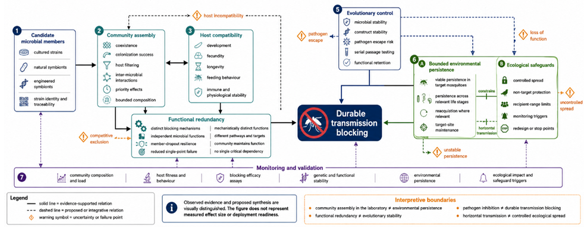
Figure 1 shows the structure of a transmission-blocking synthetic community within the analytical logic developed in this section.
|
|
|
Figure 1. The structure of a transmission-blocking synthetic community |
Alt text
A structured conceptual diagram that shows the structure of a transmission-blocking synthetic community, with labelled components, directional relations, contextual modifiers, uncertainty points, and a clear boundary between observed evidence and proposed synthesis.
A second principle is that the community must be evaluated as an interaction network rather than as a list of individually beneficial strains. Tripartite interactions among microbiota, mosquitoes, and pathogens can change with host genotype, pathogen lineage, microbial abundance, and environment [27]. The design sequence should therefore move from individual strain characterization to pairwise interaction testing, defined-community assembly, host compatibility, mechanistic blocking, member-dropout analysis, and perturbation testing. Failure at any stage should return the candidate community to redesign rather than being masked by average performance.
A third principle is that blocking efficacy must be evaluated together with mosquito phenotype. Experimental manipulation of the Aedes aegypti microbiota has shown effects on fecundity, longevity, and vector competence, demonstrating that microbial functions cannot be assessed through pathogen outcomes alone [28]. Candidate communities should therefore be rejected or redesigned when blocking is accompanied by unstable development, altered feeding, unacceptable reproductive effects, or dependence on an artificial laboratory state.
A fourth principle is environmental conditionality. Abiotic factors can reshape mosquito microbiomes and their effects on host development, indicating that a community beneficial under one habitat condition may assemble or function differently elsewhere [29]. The proposed design therefore uses stage-gated progression: traceable strains, reproducible assembly, acceptable host compatibility, durable blocking, evolutionary challenge, bounded persistence, and controlled transmission. Passing one gate does not validate later gates. The proposed components, evidence bases, boundary conditions, failure modes, and validation requirements are organized in Table 3.
Table 3. Proposed Synthetic-Ecology Design Principles: Components, Evidence Basis, Relations, Boundary Conditions, Failure Modes, and Validation Requirements
|
Proposed component |
Purpose |
Evidence basis |
Relation or mechanism |
Input or precondition |
Expected output |
Boundary condition or failure mode |
Validation requirement |
|
Traceable microbial strains |
Ensure reproducibility and attribution |
Strain collections and genomic resources support standardized comparison |
Genome, provenance, phenotype, and storage records link identity to function |
Cultured isolate and archived master stock |
Rebuildable candidate community |
Genomic potential may not be expressed in the mosquito |
Independent identity, purity, construct-stability, and phenotype confirmation |
|
Reproducible community assembly |
Establish compatible coexistence |
Host filtering and microbial interactions shape colonization |
Priority effects, competition, facilitation, and environmental recruitment |
Defined inoculum and characterized recipient microbiome |
Bounded membership and abundance |
Initial detection may represent transient exposure |
Absolute-abundance time series, invasion testing, and independent reconstruction |
|
Host compatibility |
Prevent unintended changes in mosquito biology |
Microbiota can affect development, reproduction, longevity, and vector competence |
Immune, metabolic, nutritional, and behavioural pathways |
Intended mosquito population and relevant life stages |
Acceptable multi-trait host phenotype |
Blocking may coexist with harmful or operationally counterproductive host effects |
Multigeneration fitness, feeding, development, immunity, and vector-competence assays |
|
Mechanistically independent blocking |
Reduce dependence on one strain or pathway |
Distinct symbionts and effectors can inhibit pathogens through different mechanisms |
Independent antipathogen functions converge on transmission reduction |
Compatible members with causally validated functions |
Retained blocking after single-member failure |
Several functions may share one ecological or host dependency |
Member-dropout, mechanism-specific challenge, and rescue testing |
|
Evolutionary control |
Detect functional erosion or pathogen adaptation |
Serial passage can reveal selection without proving operational escape |
Selection acts on pathogens, hosts, microbes, and engineered constructs |
Archived baselines and replicated passage lineages |
Retained phenotype with bounded change |
Stable composition may conceal genetic or functional deterioration |
Whole-cycle passage, sequencing, re-challenge, and transmission-fitness testing |
|
Bounded environmental persistence |
Maintain target exposure while limiting off-target spread |
Inherited and environmentally acquired systems show distinct persistence architectures |
Survival, inheritance, reacquisition, and habitat reservoirs maintain exposure |
Known route, recipient range, and environmental decay profile |
Sufficient persistence in target mosquitoes and sites |
Environmental detection may represent dead cells or uncontrolled reservoirs |
Viability assays, seasonal monitoring, non-target testing, and dispersal studies |
|
Ecological safeguards and monitoring |
Link evidence of failure to intervention decisions |
Community drift, pathogen evolution, and off-target spread may emerge after initial success |
Longitudinal monitoring identifies departures from defined bounds |
Validated assays, archived controls, thresholds, and responsible decision authority |
Early detection, redesign, containment, pause, or stop |
Monitoring without predefined action does not control risk |
Prospective trigger rules covering identity, function, host effects, pathogen change, and spread |
Safety, monitoring, and research implications
Strain-resolved monitoring should begin before community assembly and continue through every validation stage. MosAIC provides high-quality genomes and provenance information for mosquito-associated bacterial isolates, supporting identity checks and comparative surveillance [30]. Cryopreservation of laboratory- and field-derived larval-habitat communities can also improve reproducibility by preserving reference inocula for repeated experiments [31]. These resources address a methodological gap, but they do not replace functional testing because genomic potential and post-revival composition may not reproduce in-host activity.
Pathogen surveillance must accompany microbial monitoring. Dengue virus genomic surveillance in a Wolbachia intervention setting resolved lineage-level disruption of transmission and provided a method for identifying changes that aggregate prevalence measures could miss [32]. For synthetic communities, progress would be demonstrated by prospective integration of microbial genomes, absolute community abundance, blocking phenotype, mosquito fitness, pathogen genotype, and environmental distribution. Monitoring should distinguish normal temporal variability from persistent erosion and should specify the evidence that triggers re-testing, redesign, containment, or termination.Pre-release characterization in the intended mosquito background is necessary because symbiont density, maternal transmission, host fitness, and pathogen blocking can differ among mosquito populations [33]. The highest-priority research gap is therefore not another isolated demonstration of inhibition, but a prospective, replicated validation programme that tests complete communities across host backgrounds, environmental regimes, pathogen lineages, transmission cycles, and non-target contexts. Governance should remain proportional to uncertainty and reversibility. No community should progress solely because it blocks a pathogen in one assay, and absence of detected harm under contained conditions should not be interpreted as evidence of environmental safety.
CONCLUSION
Stable transmission-blocking synthetic mosquito microbiomes require more than the identification of microorganisms that inhibit pathogens. The strongest defensible synthesis is that durability depends on compatible community assembly, acceptable host effects, mechanistically independent blocking functions, evolutionary surveillance, reliable target-host persistence, and explicit limits on environmental transmission. These properties must be validated separately because laboratory assembly is not environmental persistence, functional redundancy is not evolutionary stability, pathogen inhibition is not durable transmission blocking, and horizontal transmission is not controlled ecological spread. The proposed framework remains a non-validated scholarly structure, but it provides a testable sequence for converting promising microbial functions into ecologically bounded evidence. The central priority is longitudinal validation that links strain identity, community structure, host phenotype, blocking function, pathogen evolution, persistence, and spread to predefined redesign and stop decisions.
ACKNOWLEDGMENTS: None
CONFLICT OF INTEREST: None
FINANCIAL SUPPORT: None
ETHICS STATEMENT: None