Entomology and
Applied Science Letters
Applied Science Letters
 2025
Volume 12
Issue 4
2025
Volume 12
Issue 4

Semiochemicals can redirect insect orientation, host finding, mating, feeding, aggregation, and natural-enemy foraging, but selecting among attraction, repellency, confusion, and recruitment remains an integrated pest-management decision problem rather than a simple choice of an active compound. The central evidence gap is that behavioural responses are frequently interpreted as control even when population suppression, crop protection, operational compatibility, and durability have not been demonstrated. This Original Semiochemical Strategy Article develops a proposed, explicitly non-validated strategy logic by conceptually integrating evidence on behavioural control tools, attraction and mass trapping, repellency and host-location disruption, confusion and push–pull, natural-enemy recruitment, spatial context, delivery, and behavioural adaptation. The synthesis indicates that strategy selection should begin with the protected endpoint and the behavioural breakpoint that causally connects insect activity to crop risk. Attraction is useful only when approach is converted into reliable interception, retention, removal, or monitoring information; repellency is useful only when displacement reduces crop contact without transferring pressure elsewhere; confusion requires evidence of disrupted communication and downstream reproductive effects; and recruitment requires demonstrated enemy encounter and attack rather than abundance alone. Across these operations, laboratory response is an insufficient proxy for field effect, and short-term efficacy does not establish durable programme performance. Major limitations include taxonomic and system specificity, heterogeneous endpoints, incomplete reporting of spatial context and delivery persistence, and limited repeated-exposure validation. The principal implication is that semiochemical tactics should be selected, combined, and governed through objective-led evidence chains with separate behavioural, demographic, crop, operational, and adaptation criteria.
INTRODUCTION
Semiochemicals are attractive components of integrated pest management because they can modify information use rather than depend exclusively on broad toxic exposure. Their practical value, however, depends on whether the altered behaviour addresses a specified crop-protection problem. Semiochemical strategy selection should therefore be treated as an IPM decision problem in which intervention objectives, ecological processes, and complementary tactics are specified before a product or cue is chosen [1]. This ordering prevents a detectable response to a lure, repellent, or pheromone from being mistaken for a complete management rationale.
The decision is also embedded in production systems where pest pressure, resistance, crop phenology, biological control, monitoring capacity, and grower operations interact. Experience with western flower thrips further shows that behaviourally targeted tools enter systems already shaped by resistance, biological-control compatibility, monitoring needs, and protected-crop constraints [2]. A semiochemical tactic that performs biologically may therefore remain unsuitable when its timing, delivery burden, non-target effects, or dependence on complementary interventions conflicts with the wider programme.
The management endpoint must likewise be distinguished from the immediate behavioural event. Behavioural manipulation can reduce vector–host encounters without necessarily eradicating a vector population, making the protected endpoint—not attraction or repellency alone—the relevant management criterion [3]. Conversely, a strong approach, avoidance, or trap-entry response may fail to alter pest density, damage, transmission, yield, or quality. Behavioural response is thus evidence about one link in an intervention chain, not automatic evidence of population suppression.
This article addresses the gap between categorizing semiochemicals by behavioural labels and selecting them according to IPM objectives. It argues that attraction, repellency, confusion, and recruitment should be treated as distinct behavioural operations whose value depends on the targeted breakpoint, spatial arrangement, delivery persistence, ecological compatibility, and adaptation risk. The proposed contribution is a scholarly strategy logic rather than a validated framework: it organizes evidence-supported decision points while retaining uncertainty, system dependence, and explicit requirements for prospective testing.
Semiochemicals as behavioural control tools
Semiochemicals function as information-bearing cues whose effects arise through receiver biology, not through chemical identity alone. Pheromones are evolved information signals whose ecological meaning depends on sender, receiver, and context, so chemical identity alone does not determine a controllable behavioural endpoint [4]. For IPM, the relevant construct is therefore the behavioural operation produced under specified conditions: orientation toward a source, avoidance of a location, interference with signal localization, interruption of host contact, or recruitment of an organism capable of affecting the focal pest.
Chemical information may also interact with visual, acoustic, vibrational, or physical signals along a behavioural sequence. Semiochemical systems can also be combined with visual, acoustic, or vibrational stimuli, but multimodality should be justified by the sequence of behaviours that limits intervention performance [5]. Sex-pheromone applications illustrate the breadth of monitoring, mass-trapping, attract-and-kill, and mating-disruption uses while also showing that formulation, dose, and population biology constrain transfer among uses [6]. Adding modalities or changing delivery is therefore defensible only when it resolves a demonstrated failure in detection, orientation, encounter, retention, mating, or another defined step.
Evidence for attraction further illustrates why labels cannot substitute for endpoint-specific evaluation. A meta-analysis of western flower thrips attraction indicates that lure performance varies among compounds and testing conditions, supporting evidence-weighted rather than label-based selection of attractants [7]. Variation may reflect compound identity, dose, sex, physiological state, background odour, visual context, or experimental scale; it should not be collapsed into a universal attractant effect. The evidence dimensions and interpretive boundaries for semiochemicals as behavioural control tools are summarized in Table 1.
Table 1. Semiochemicals as Behavioural Control Tools: Pest Targets, Ecological Mechanisms, Intervention Timing, Context Dependence, Trade-Offs, and Adaptive Management Requirements
|
IPM component |
Target pest or guild |
Ecological or behavioural mechanism |
Timing and sequence |
Expected contribution |
Context dependency |
Trade-off or failure risk |
Monitoring or adaptation need |
|
Communication-signal targeting |
Pheromone-responsive pest adults |
Exploits or disrupts evolved sender–receiver information |
Match release to responsive sex, stage, and activity period |
Alters a defined communication step |
Signal meaning varies with receiver and ecological context |
Chemical identity may be overgeneralized across taxa or objectives |
Confirm receiver response and the downstream endpoint in the target system |
|
Multimodal monitoring or interception |
Pests using chemical plus visual, acoustic, or vibrational information |
Reinforces sequential detection, orientation, and encounter |
Add a modality only at the demonstrated limiting step |
Improves detection or contact with a trap or treated point |
Relative cue salience changes with crop structure and background signals |
Additional stimuli can add complexity without improving the limiting behaviour |
Compare each added modality against a chemical-only baseline and downstream use |
|
Pheromone-based monitoring |
Sex-pheromone-responsive pests |
Attracts responsive insects to a sampling device |
Deploy before or during the decision-relevant flight period |
Supports detection, phenology tracking, or treatment timing |
Catch depends on formulation, dose, population biology, and placement |
Catch may not represent absolute density or crop risk |
Standardize trap operation and validate decision linkage |
|
Mass trapping or attract-and-kill |
Responsive mobile adults |
Concentrates insects and converts approach into retention, removal, or mortality |
Operate before reproduction or damaging colonization when feasible |
May reduce a local reproductive or damaging population |
Requires sufficient active space, device persistence, and spatial coverage |
High catch can coexist with immigration, saturation, or continued damage |
Track device function separately from pest density and crop injury |
|
Mating disruption or confusion |
Mate-seeking adults |
Degrades localization of natural communication signals |
Maintain effective release throughout the mating period |
May reduce successful mating and subsequent recruitment |
Performance can vary with density, edges, formulation, and release continuity |
Dispenser deployment alone does not prove mating interference |
Measure mating, fertility, and the next generation rather than release rate alone |
|
Evidence-weighted attraction |
Western flower thrips and comparable lure-responsive pests |
Increases orientation or approach to a cue source |
Align testing with the intended monitoring or interception window |
Identifies candidate lures for further field evaluation |
Effects vary among compounds and experimental conditions |
Laboratory attraction may not persist amid field odours or produce control |
Replicate under crop conditions and measure capture plus the intended downstream endpoint |
|
Host-location disruption or repellency |
Host-seeking crop pests |
Reduces cue reliability, approach, landing, feeding, or oviposition |
Apply before host contact or damaging colonization |
May reduce exposure of the protected crop |
Effect depends on multisensory compensation and surrounding odours |
Avoidance may merely redistribute insects to another crop area |
Map destination, contact, damage, and non-target responses |
Attraction and mass-trapping strategies
Attraction becomes a control operation only when a cue is integrated with a device, treated point, or crop arrangement that reliably converts approach into interception and removal. Field-exposed attract-and-kill devices retained high initial lethality but lost performance as insecticide residues decayed, showing that attraction and device persistence are separate operational requirements [8]. At suitable density, the same device class reduced a local Japanese beetle population, but the result remains conditional on homogeneous starting density and the treated spatial configuration [9]. These findings separate chemical attractiveness, lethal function, device density, and spatial closure as independently testable requirements.
Attraction can also be used to reorganize pest distribution rather than remove insects directly. Semiochemically assisted trap cropping reduced beetle eggs and bean damage primarily in field centres, not edges, and did not increase yield, separating spatially bounded damage mitigation from whole-field agronomic benefit [10]. The result is consistent with an edge- and immigration-sensitive mechanism, although the evidence does not establish a universal explanation. A trap crop may protect part of a field while leaving border exposure, yield limitation, or subsequent pest movement unresolved; damage distribution and agronomic benefit must therefore be assessed separately.
Multimodal attraction may improve monitoring sensitivity, yet this does not shorten the evidence chain required for management. Combining visual and olfactory cues improved Lygus monitoring potential, yet enhanced capture remains a precursor to—not evidence of—population suppression [11]. For mass trapping, the minimum chain is attraction, device encounter, retention or mortality, sufficient removal relative to immigration and reproduction, and a measured reduction in population or crop damage. For monitoring, capture can be valuable without suppression, but only when catches are calibrated to phenology, risk, or an intervention decision rather than interpreted as control.
Repellency and host-location disruption
Repellency should be defined as a context-specific behavioural effect rather than an intrinsic and universal property of a compound. Verbenone is not a universal repellent: bark-beetle responses include inhibition, no response, and attraction, and ecological function may differ among species and microbial contexts [12]. In avocado, repellents and attractive mass-trapping components could be coupled as push–pull, but dispenser phytotoxicity, active space, and immigration constrained implementation [13]. These findings distinguish avoidance from crop protection and show that displacement becomes useful only when its spatial destination and interaction with a pull or removal component are controlled.
Host-location disruption can arise through masking, competition among odours, reduced signal reliability, or altered orientation, and field design must discriminate these mechanisms from visual or structural effects. Field-applied plant volatiles altered cabbage-root-fly behaviour without detected adverse effects on sampled natural enemies, demonstrating that non-target compatibility must be tested rather than assumed [14]. This evidence supports compatibility assessment under the applied crop context, but it does not establish neutrality for all natural enemies, doses, or environments. Destination mapping, crop contact, pest injury, and natural-enemy function are therefore necessary alongside behavioural observations.
Controlled studies can identify promising compounds and plausible mechanisms while remaining insufficient for field-scale inference. Lamiaceae volatiles repelled winged cotton aphids and altered feeding and fecundity, but these behavioural and physiological endpoints do not by themselves establish crop-scale suppression [15]. Reduced landing, disturbed feeding, lower fecundity, and removal are different constructs; each can contribute to protection, but none should be substituted for population or damage evidence. Strategy selection must consequently specify whether the intended objective is temporary contact reduction, redistribution toward an interception zone, delayed colonization, demographic suppression, or integration with another tactic, and then validate that endpoint at the relevant spatial and temporal scale.
Confusion, push–pull, and natural-enemy recruitment
Confusion and multimodal manipulation should be distinguished from simply adding another attractive signal. Adding a species-specific vibrational calling signal increased brown marmorated stink bug entry into pheromone traps, indicating that a close-range communication bottleneck can limit capture [16]. The result supports purposeful multimodal design, but increased trap entry remains an interception endpoint. It does not establish that the removed fraction is sufficient to suppress a population or protect a crop.
Push–pull strategies require spatial coupling between displacement and interception. Mechanistic modelling indicates that performance depends on the relative active spaces of repellents and attractive traps, orchard geometry, pest movement, and the probability that displaced insects reach a sink [17]. Field deployment in strawberry provides stronger endpoint evidence: a synthetic push–pull programme reduced Lygus rugulipennis abundance and fruit damage in the tested system [18]. The evidence is therefore convergent on spatial coordination but context-dependent in transferability; modelled redistribution is not field validation, and one successful crop–pest configuration does not establish universal push–pull performance.
Natural-enemy recruitment adds a trophic requirement that is absent from pest-directed attraction. In organic apple orchards, combining mating disruption, natural-enemy attractants, and floral resources increased generalist predator abundance and reduced some lepidopteran pests, yet greater enemy abundance did not reduce survival of sentinel aphids [19]. Recruitment must consequently be evaluated as arrival, retention, focal-prey encounter, attack, and crop protection rather than as abundance alone. Similarly, confusion should be evaluated through mate localization, mating, fertility, and subsequent recruitment rather than inferred from dispenser deployment or reduced monitoring-trap catch.
Context, scale, and behavioural adaptation
Receiver responsiveness is conditional on physiological and environmental state. Male oriental fruit-fly responses to methyl-eugenol traps varied with previous semiochemical feeding, age, temperature, and humidity, demonstrating that lure response is not a fixed property of the compound [20]. Declining or variable trap catch may therefore indicate altered motivation, weather-dependent activity, prior exposure, population change, or some combination of these processes. Independent population measures are needed before catch variation is interpreted as suppression or behavioural adaptation.
Context also includes the surrounding information environment. Anthropogenic alteration of odour landscapes may change the reliability of host-associated signals and influence herbivore orientation, although broader invasion and evolutionary consequences remain hypotheses requiring direct validation [21]. Crop volatiles, neighbouring vegetation, synthetic odours, atmospheric conditions, and repeated interventions can alter the contrast between a semiochemical and its background. Laboratory attraction or repellency is therefore not equivalent to field-scale effect because the crop canopy presents a dynamic, multisensory odourscape rather than an isolated cue.
Signal production and response may also be plastic. Aggregation-pheromone composition and output can vary with density, food, location, and symbiotic microorganisms, challenging assumptions that a fixed blend will remain equally informative across populations and seasons [22]. Short-term behavioural manipulation is consequently not equivalent to durable performance without adaptation. Durability assessment should separate reversible state changes, learning or habituation, population turnover, signal plasticity, and heritable response change through repeated-exposure, multi-season, and spatially replicated evaluation.
Proposed semiochemical strategy logic
The proposed strategy logic begins with a named IPM objective and then identifies the behavioural breakpoint linking insect activity to crop risk. It classifies the available operation as attract, repel, confuse, or recruit and specifies whether attraction leads to monitoring, interception, killing, or population removal. Area-wide semiochemical programmes illustrate why isolated trap catches must be converted into coordinated detection, interpretation, and intervention decisions [23]. Delivery must also be treated as part of the intervention because dispenser materials and release kinetics determine dose continuity and field life [24].
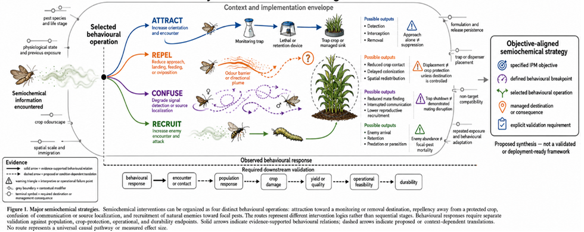
Figure 1 classifies major semiochemical strategies within the analytical logic developed in this section.
|
|
|
Figure 1. Major semiochemical strategies |
Alt text
A structured conceptual diagram that classifies major semiochemical strategies, with labelled components, directional relations, contextual modifiers, uncertainty points, and a clear boundary between observed evidence and proposed synthesis.
Alignment then requires matching each behavioural mechanism to the protected endpoint. Trap catch is jointly influenced by lure, trap architecture, placement, weather, competing odours, and insect condition, so comparisons are interpretable only when these determinants are controlled or reported [25]. Controlled-release formulations can improve volatile stability and temporal delivery, but physicochemical improvement does not demonstrate behavioural, demographic, crop, or operational effectiveness [26]. Attract operations fit detection or removal only when a reliable sink exists; repel operations fit contact reduction only when displacement is managed; confuse operations fit mating prevention only when reproductive consequences are shown; and recruit operations fit biological control only when enemy attack affects the focal pest.
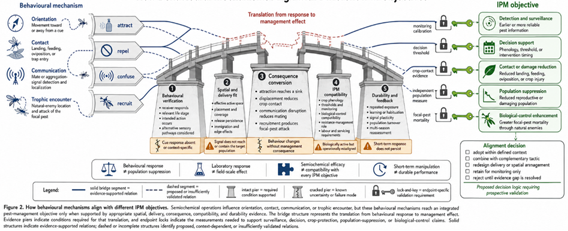
Figure 2 shows how behavioural mechanisms align with different IPM objectives within the analytical logic developed in this section.
|
|
|
Figure 2. How behavioural mechanisms align with different IPM objectives |
Alt text
A structured conceptual diagram that shows how behavioural mechanisms align with different IPM objectives, with labelled components, directional relations, contextual modifiers, uncertainty points, and a clear boundary between observed evidence and proposed synthesis.
The resulting output is a provisional strategy recommendation, not a deployment-ready framework. Every choice must pass context and scale, delivery and persistence, IPM compatibility, and adaptation gates. Validation must then examine the full translation chain from cue release to detection, orientation, encounter, behavioural action, population response, crop damage, yield or quality, and operational feasibility. The proposed components, evidence bases, boundary conditions, failure modes, and validation requirements are organized in Table 2.
Table 2. Proposed Semiochemical Strategy Logic: Components, Evidence Basis, Relations, Boundary Conditions, Failure Modes, and Validation Requirements
|
Proposed component |
Purpose |
Evidence basis |
Relation or mechanism |
Input or precondition |
Expected output |
Boundary condition or failure mode |
Validation requirement |
Representative supporting reference(s) |
|
Specify the IPM objective |
Prevent tactic-first selection |
Objective-led IPM logic |
Defines which behavioural and downstream endpoints matter |
Named objective and protected crop endpoint |
Explicit success criterion |
Capture may be optimized when damage reduction is required |
Compare objective-led selection with observed programme outcomes |
[1] |
|
Identify the behavioural breakpoint |
Locate the behaviour causally connected to risk |
Behavioural-manipulation synthesis |
Maps detection, orientation, encounter, action, and consequence |
Target species, stage, time, and damaging activity |
Defined intervention point |
A non-limiting behaviour may be manipulated |
Mechanistic and field mediation tests |
[3] |
|
Select an attract operation |
Direct insects toward monitoring or a sink |
Attraction synthesis |
Increases approach and encounter |
Responsive receiver and destination device |
Detection, interception, or removal |
Attraction may increase local pressure without retention |
Measure approach, capture, retention, density, and damage separately |
[7] |
|
Specify mass-trapping removal |
Convert capture into demographic effect |
Device-density field evidence |
Removes a sufficient proportion of the responsive population |
Persistent devices, adequate density, characterized immigration |
Reduced local population |
Saturation, spill-in, and immigration can maintain damage |
Independent population and crop-injury measurements |
[9] |
|
Select a repel operation |
Reduce contact with the protected crop |
Species-specific repellency evidence |
Reduces entry, landing, feeding, or oviposition |
Verified response and known displaced destination |
Lower crop contact |
Neutral or attractive responses and pest redistribution |
Spatial movement, crop-contact, and damage assessment |
[12] |
|
Specify host-location disruption |
Reduce reliability of host information |
Field volatile-manipulation evidence |
Masks, competes with, or changes host-cue interpretation |
Relevant odourscape and host-seeking stage |
Reduced host encounter |
Multisensory compensation or crop-background effects |
Factorial field tests of cue, setting, and contact |
[14] |
|
Select confusion or mating disruption |
Interfere with communication and mate localization |
Pheromone-management evidence |
Degrades localization or close-range signalling |
Defined communication system and sustained release |
Reduced mating and recruitment |
Trap shutdown may occur without mating reduction |
Direct mating, fertility, and next-generation measures |
[6] |
|
Couple push and pull |
Link displacement to interception or removal |
Field push–pull evidence |
Directs pests from a protected zone toward a managed sink |
Compatible active spaces, timing, geometry, and trap capacity |
Crop protection with pest interception |
Push may outrun pull or pull may attract pests inward |
Spatially resolved capture, abundance, and damage trials |
[18] |
|
Select a recruit operation |
Increase natural-enemy encounter and attack |
Orchard field evidence |
Attracts and retains enemies near focal prey |
Responsive enemy, acceptable prey, resources, and timing |
Greater realized predation or parasitism |
Enemy abundance may increase without focal-pest mortality |
Prey-removal, parasitism, damage, and non-target assessment |
[19] |
|
Apply the context and adaptation gate |
Qualify expected responsiveness |
State-dependent lure evidence |
Reweights detection and action through experience, physiology, and weather |
Contextual and exposure-history data |
Conditional response prediction |
Apparent efficacy loss may reflect weather or state |
Repeated-exposure and multi-season experiments |
[20] |
|
Apply the spatial and delivery gate |
Maintain effective exposure in the intended domain |
Dispenser and release evidence |
Links release kinetics to encounter probability |
Defined dose, release profile, placement, density, and persistence |
Stable behavioural exposure |
Device performance may not translate into behavioural effect |
Concurrent chemical-release and biological measurements |
[24] |
|
Apply compatibility and feedback |
Determine whether the tactic belongs in an IPM programme |
Area-wide programme synthesis |
Connects monitoring, interpretation, intervention, and redesign |
Decision rule, complementary controls, feasible operation, and feedback |
Bounded recommendation or redesign decision |
Technically effective tactics may remain operationally unsuitable |
Prospective comparison of predicted and observed programme performance |
[23] |
Integration into IPM programmes
Integration requires more than replacing one input with another. IPM frequently remains pesticide-centred when tactics are treated as sequential substitutes rather than components of prevention, monitoring, thresholds, biological regulation, and system redesign [27]. Semiochemical efficacy is therefore not equivalent to compatibility with every IPM objective. A tactic must fit crop phenology, intervention thresholds, biological-control plans, resistance management, labour, device servicing, cost, and the consequences of pest displacement.
Field success is most informative when the behavioural mechanism is linked to timing, placement, and crop protection. In peanut, a spatially and temporally targeted food-attractant attract-and-kill programme reduced adult and larval Stegasta bosqueella abundance and plant injury [28]. This example supports monitoring-triggered deployment rather than generalized broadcasting. Its success remains conditional on the focal pest, crop, attractant, lethal component, placement, and intervention window, and it does not establish equivalent performance in other systems.
The main implementation priority is cultivation-system validation. For whiteflies, plant semiochemicals offer plausible attraction, repellency, and host-location mechanisms, but field evidence remains sparse relative to laboratory evidence [29]. Future programmes should therefore predefine behavioural, population, damage, yield or quality, non-target, operational, and durability endpoints; record delivery and spatial context; and specify stop or redesign rules. Governance should preserve uncertainty rather than converting promising olfactory responses into unsupported readiness claims.
CONCLUSION
Semiochemical strategy selection should begin with the IPM objective and the behavioural breakpoint that connects insect activity to crop risk. Attraction is appropriate when approach can be converted into information, interception, or sufficient removal; repellency is appropriate when displacement reduces crop contact without exporting the problem; confusion is appropriate when communication interference produces reproductive consequences; and recruitment is appropriate when enemy arrival becomes focal-pest attack and crop protection. The strongest synthesis is therefore objective-led and endpoint-separated rather than compound-led. Its principal boundary conditions are receiver state, ecological context, spatial movement, delivery persistence, operational compatibility, and behavioural adaptation. The highest-priority implication is prospective validation of the complete behaviour-to-outcome chain, because behavioural response is not population suppression, laboratory response is not field effect, efficacy is not universal IPM compatibility, and short-term manipulation is not durable performance.
ACKNOWLEDGMENTS: None
CONFLICT OF INTEREST: None
FINANCIAL SUPPORT: None
ETHICS STATEMENT: None